

Your Furniture Isn't Waterproof. It's Just Dressed Well.
Let's be honest | most furniture looks waterproof until it isn't.
One spilled glass of water near the wrong screw, and three months later your cabinet base is puffing up like it swallowed a sponge.
Here's the truth nobody tells you: laminated plywood CAN be fully waterproof. But only if whoever built it didn't skip the boring parts.
1. The edges are where furniture goes to die
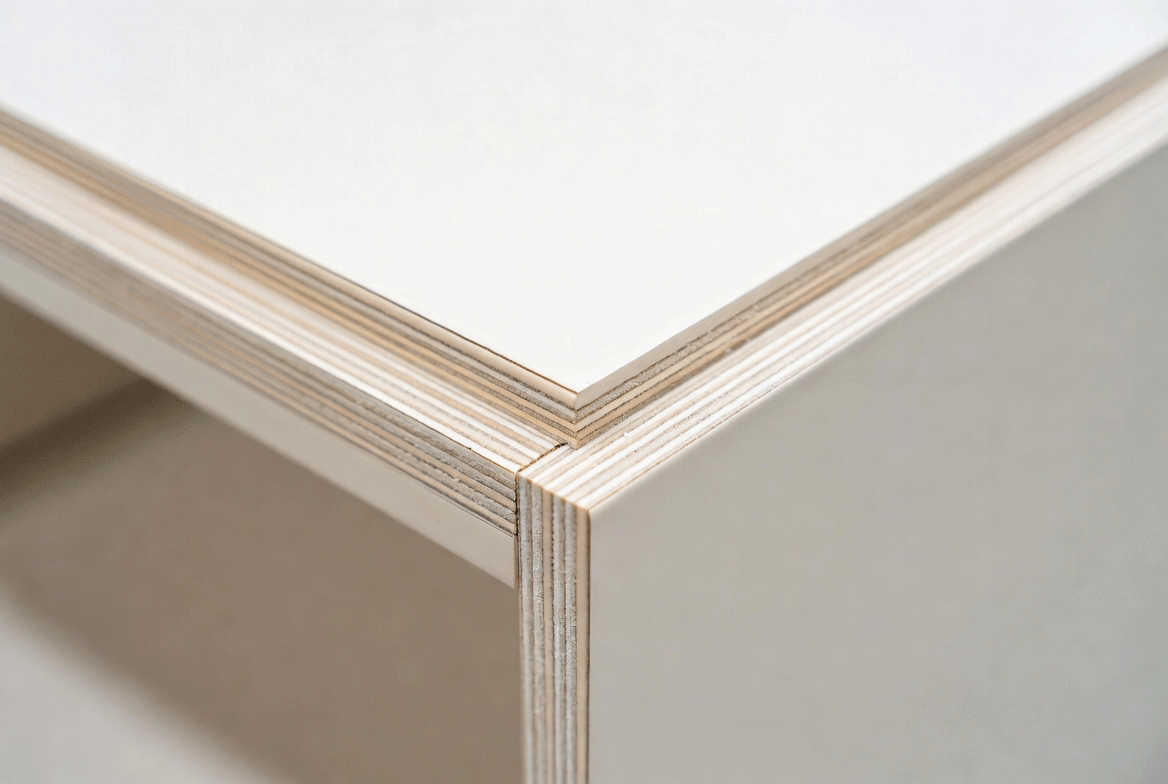
Cut a board, and you expose the raw layers underneath — basically an open mouth waiting to drink water.
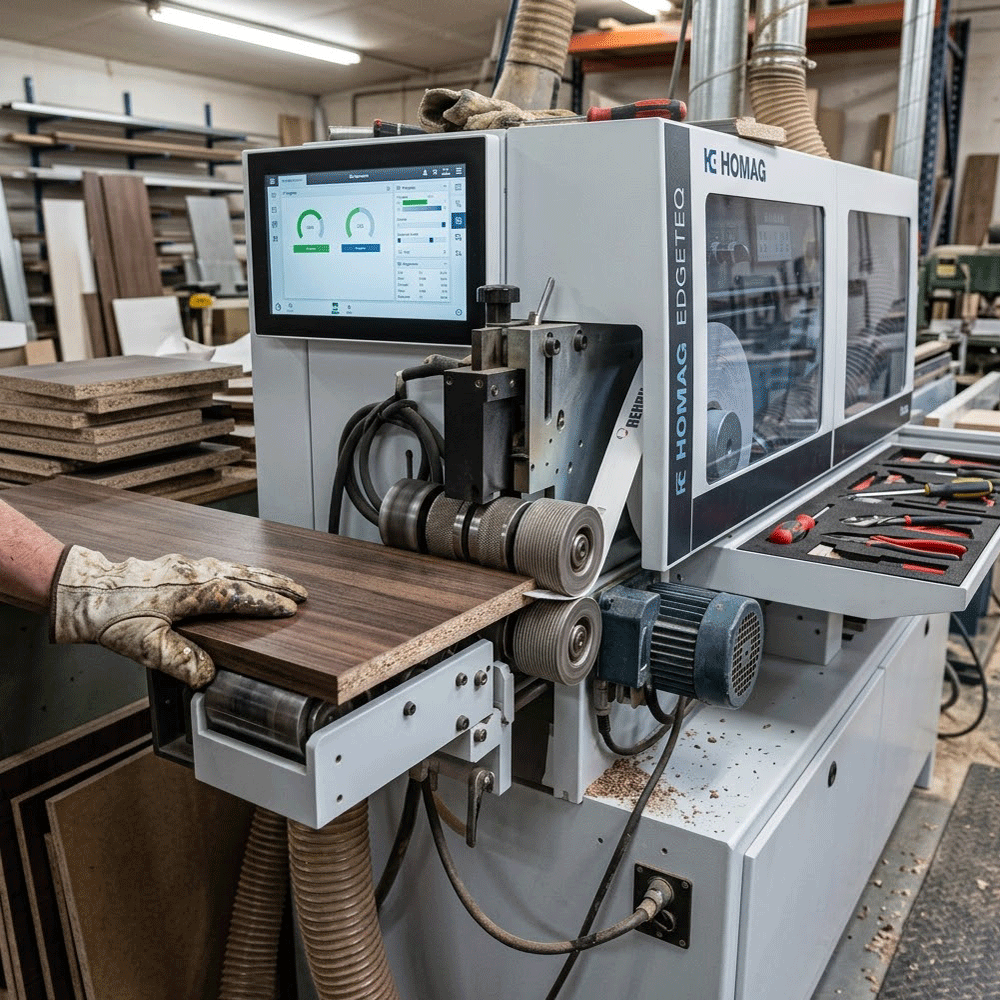
The fix? Every edge gets sealed shut using hot-melt glue through an edge banding machine. Melts on, locks tight, done.
No exposed edge = no way in. Simple as that.
2. That screw? It's basically a straw.
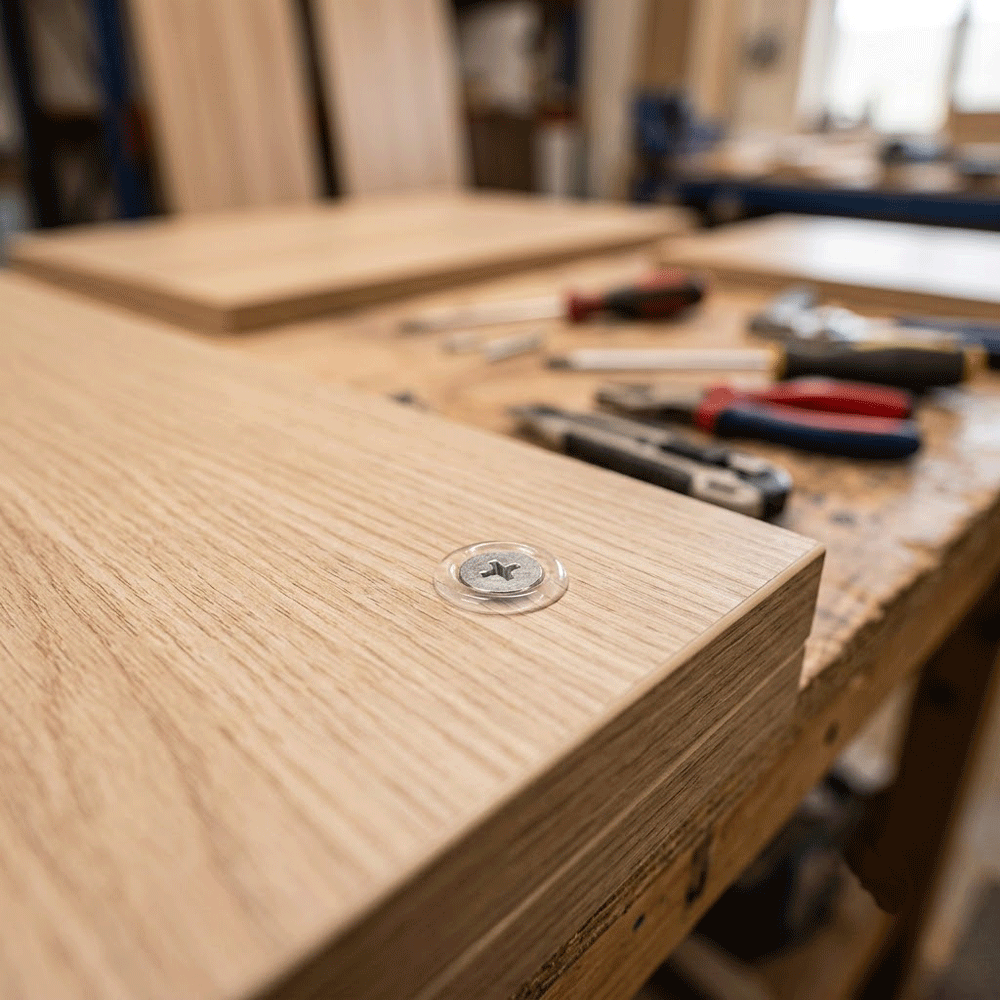
Nobody thinks about screws. But every screw hole is a tiny tunnel straight into the wood.
Leave it bare, and water travels down it like it's got somewhere to be. A dab of silicone before the screw goes in seals the tunnel shut.
Small step. Saves the whole panel.
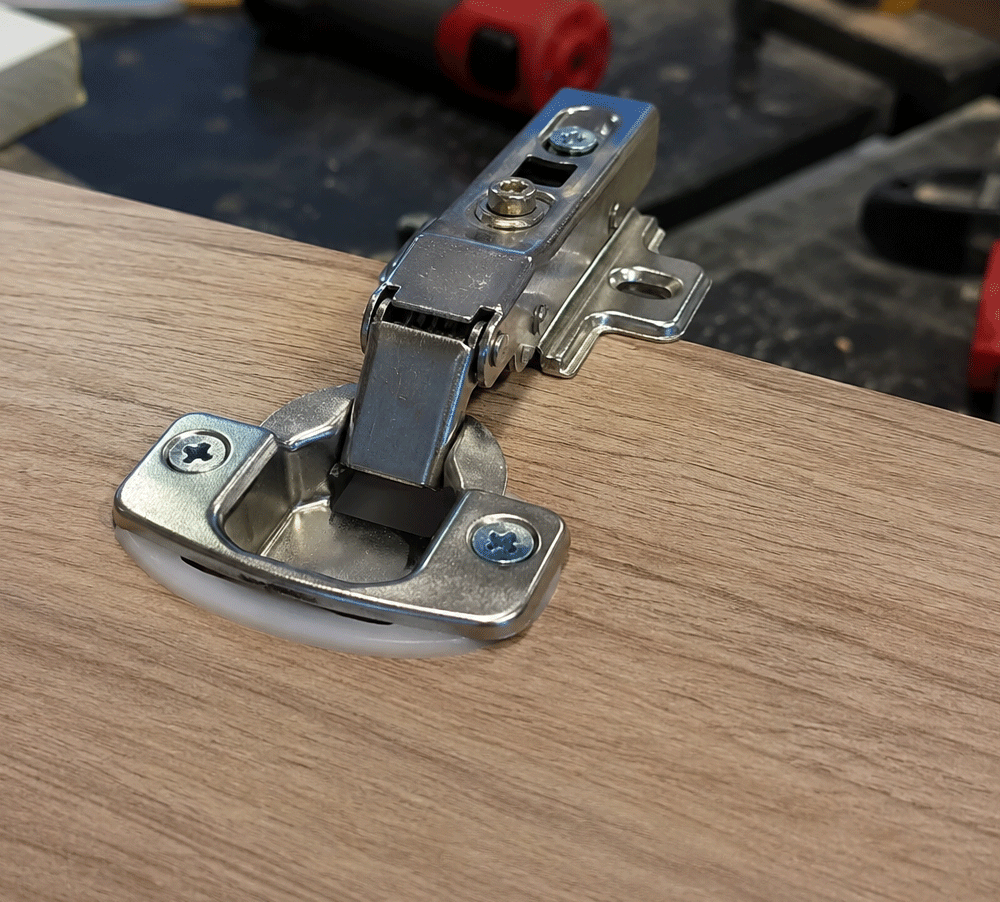
3. Hinges have a secret weak spot
Every hinge sits inside a drilled hole. And drilled holes don't come pre-sealed.
A ring of silicone sealant around the hinge cup fixes that instantly. You'll never see it. It'll just quietly do its job for years.
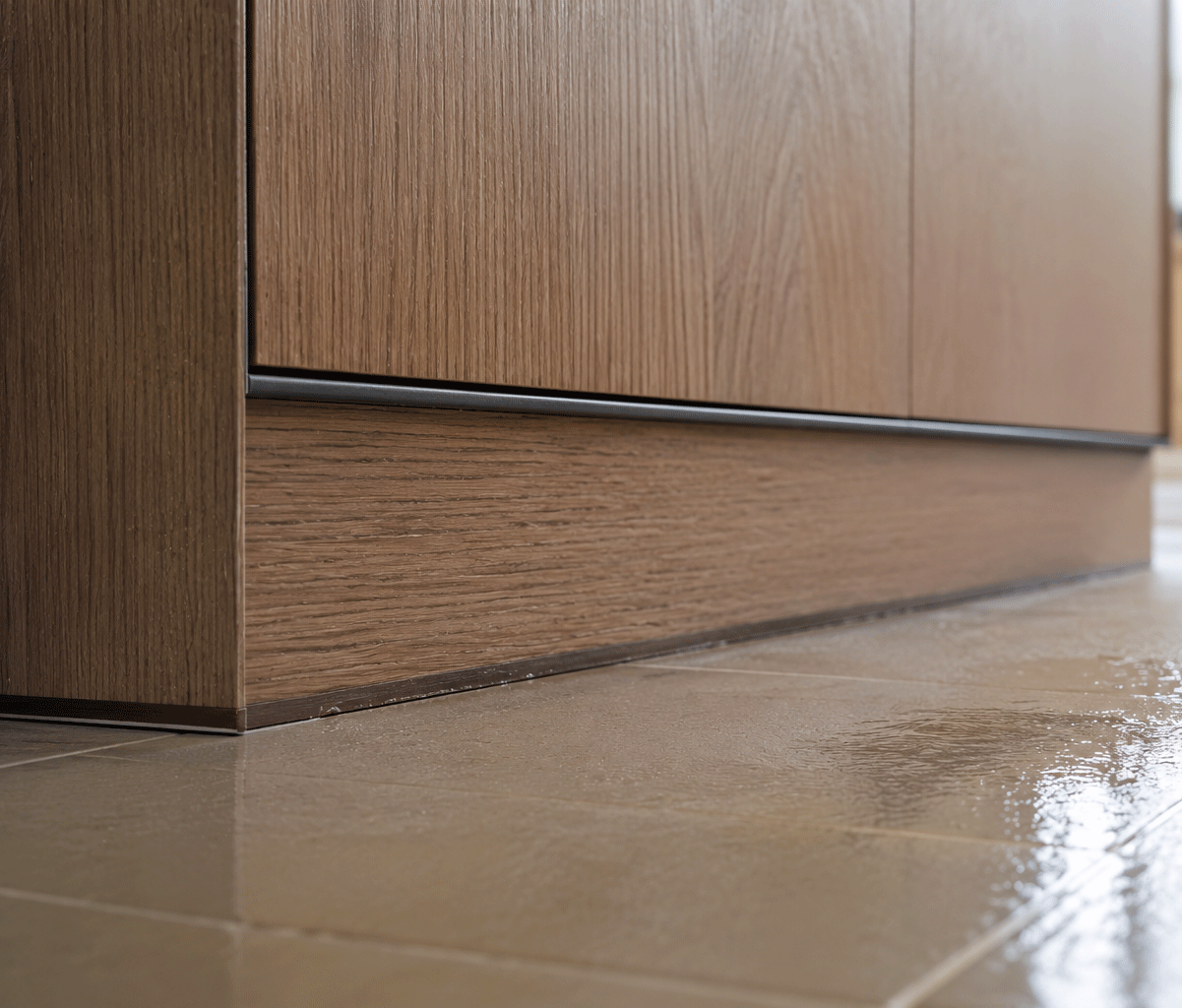
4. The bottom of your furniture has it the worst
Think about it — the base is the part closest to mopped floors, spilled drinks, and rising humidity. It takes more hits than anywhere else.
If that bottom edge isn't sealed the same way as the rest, that's exactly where the swelling starts first.
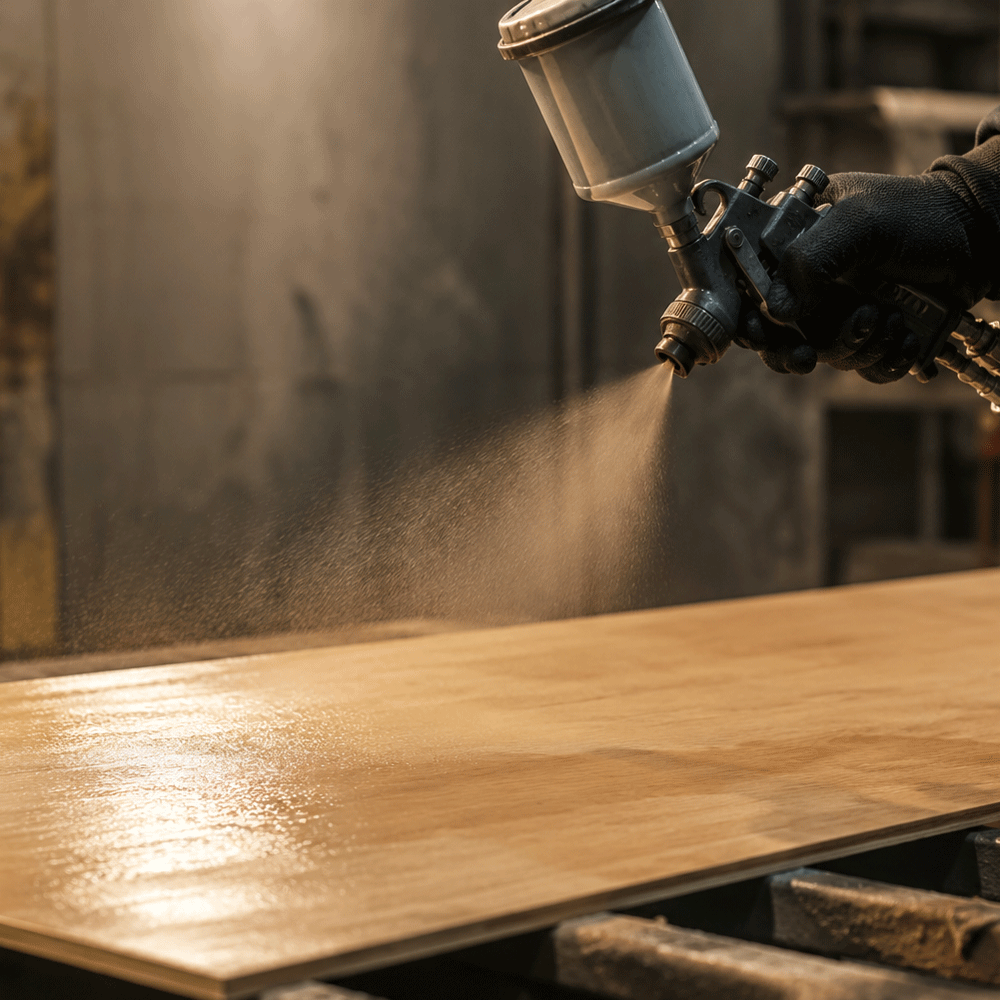
5. The back panel is thinner than you think
Most backs are just 6mm. Thin, exposed, and usually facing a wall where moisture likes to sit quietly and wait.
Spraying that surface with resin closes it up completely. Out of sight, doing all the work.
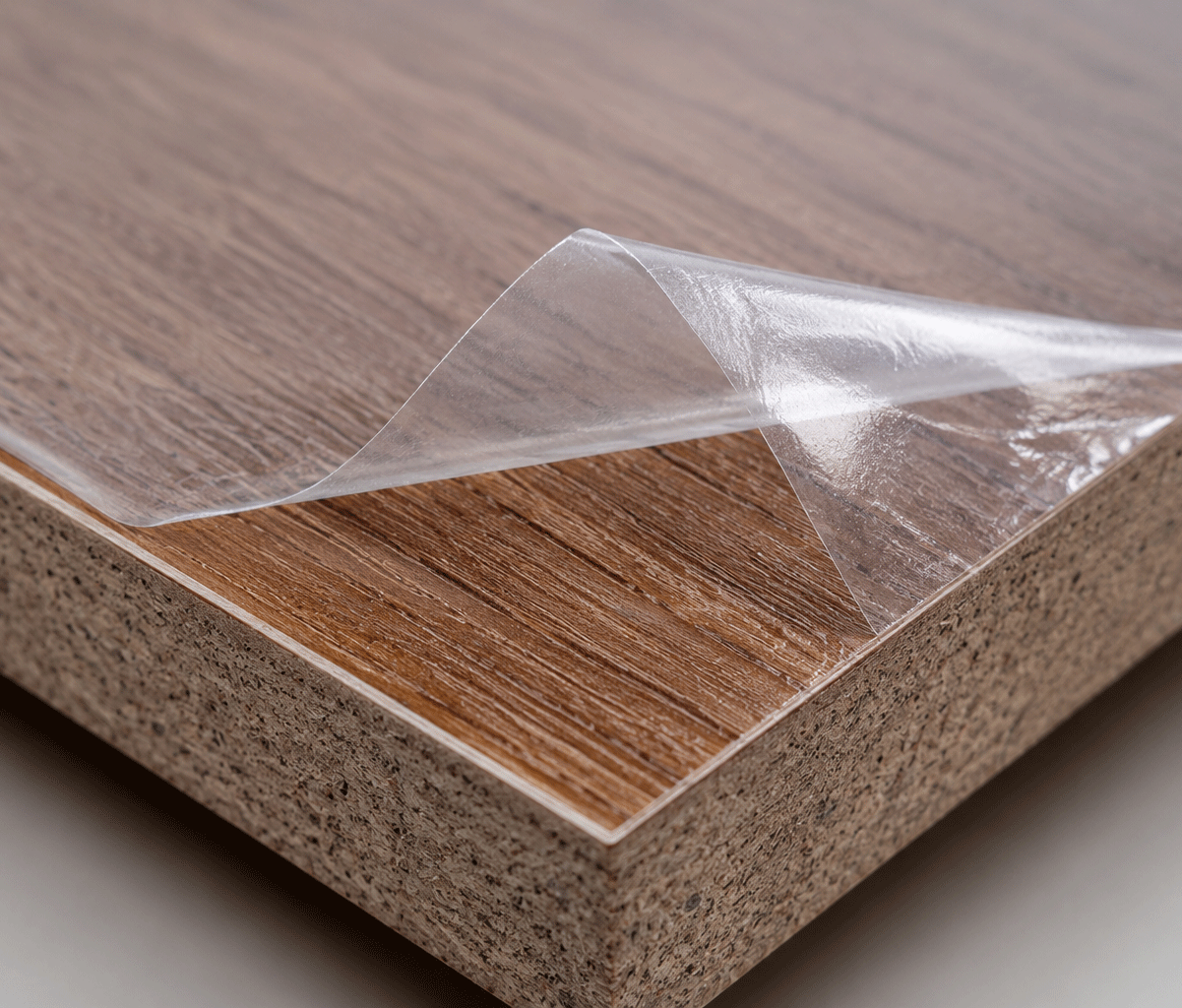
6. The plastic film on top? That's the reward, not the shortcut
Yes, laminated boards come with a protective film already on them. But that film only means something once everything underneath — edges, screws, hinges, back — is already sealed properly.
Skip the steps above, and that film is just a nice-looking cover on a problem waiting to happen.
So... is your furniture actually waterproof?